
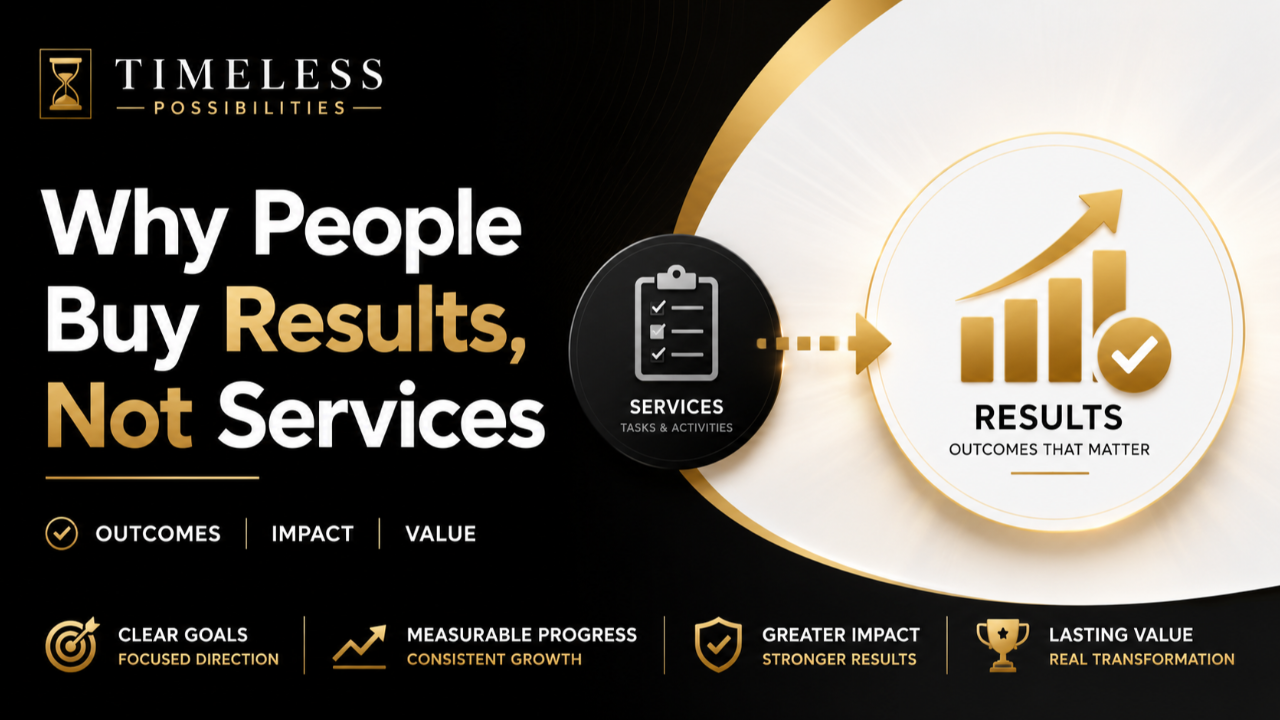
Why People Buy Results, Not Services
Jul 07, 2026One of the most important shifts you can make when building a side income is understanding what people are really buying. At first, it may seem like people buy services. They hire someone for lawn care, tutoring, bookkeeping, cleaning, organizing, coaching, repairs, writing, design, or some other specific task.
But when you look a little deeper, people are usually not buying the service itself. They are buying the result the service helps create.
A busy homeowner does not simply want lawn care. They want their yard to look good without giving up their weekend. A parent does not simply want tutoring. They want their child to feel more confident and do better in school. A small business owner does not simply want bookkeeping help. They want less stress, better organization, and more confidence about their numbers.
When you understand this, your offer becomes much stronger. You stop talking only about what you do, and you start communicating why it matters.
Your Service Is the Vehicle
A service is simply the way you help someone get somewhere. Think about a taxi or ride-share service. Most people do not book a ride because they are excited about sitting in a vehicle. They book the ride because they want to get to a destination.
Your service works the same way. The service is the vehicle. The result is the destination. If you only talk about the service, people may understand the category you are in, but they may not feel the value. If you talk about the result, they can connect your offer to something they actually want.
That is why “I do bookkeeping” is weaker than “I help small business owners organize their records so they feel more prepared and less stressed at tax time.” Both statements point to the same general service, but the second one communicates a result that feels valuable.
Results Create Emotional Value
People often make buying decisions because they want a better situation and a better feeling. They may want relief, confidence, peace of mind, more time, less stress, better organization, improved performance, or a sense of progress. These results matter because they connect your offer to something personal.
For example, a parent may pay for tutoring because they want their child to improve in math. But underneath that, they may also want their child to feel less frustrated, participate more confidently in class, and stop believing they are “just not good at this.” That emotional result matters.
The more clearly you understand the real result your customer wants, the easier it becomes to explain your value in a way that feels meaningful.
Features Explain, Results Connect
Many people make the mistake of describing features instead of results. A feature explains what is included. A result explains why it matters.
“Weekly tutoring sessions” is a feature. “Helping your child rebuild confidence and understand math more clearly” is a result. “Monthly bookkeeping support” is a feature. “Helping you feel organized and prepared instead of overwhelmed by your records” is a result. “Basic lawn care” is a feature. “Helping your yard look cared for without giving up your weekend” is a result.
Features are still useful, but they should support the result. If you only list features, people may understand what you offer, but they may not feel why they should care.
Clear Results Make Your Offer Easier to Share
When your offer focuses on a result, it becomes easier for people to remember and repeat. That matters because referrals are one of the simplest ways to find your first customers.
If someone says, “Dave does some kind of business coaching,” that may not create much interest. But if they say, “Dave helps people choose one realistic side income idea and create a simple plan to earn their first $1,000,” the value becomes clearer.
The more specific the result, the easier it is for the right person to recognize themselves. People are more likely to respond when they can quickly think, “That is exactly what I need,” or “I know someone who needs that.”
Your Result Does Not Need to Be Huge
Some people hesitate because they think their offer has to promise a massive transformation. It does not. Your result simply needs to matter to the person who has the problem.
A clean garage matters to someone who feels embarrassed every time they open it. A simple spreadsheet matters to a small business owner who feels disorganized. A few prepared meals may matter to a busy family trying to reduce stress during the week. A stronger resume may matter to someone looking for a better job.
Small results can still create real value. Do not underestimate the importance of helping someone solve a problem that has been bothering them for weeks, months, or even years.
Ask Better Questions
If you want to understand what result people really want, ask better questions. Instead of only asking, “Would you pay for this?” ask about the problem. What have they already tried? What frustrates them most? What would change if the problem was solved? What would make this feel worth paying for?
Those questions help you move beyond assumptions. They also help you hear the words people actually use to describe the result they want. That is valuable because the best marketing often reflects the customer’s real language. When people see their own problem clearly described, they are more likely to pay attention.
Rewrite Your Offer Around the Result
A simple way to strengthen your offer is to ask, “So what?” If you say, “I offer meal planning,” ask, “So what?” The answer might be, “So busy families can reduce stress, save time, and stop wondering what to make for supper.”
If you say, “I offer resume help,” ask, “So what?” The answer might be, “So job seekers can present themselves more clearly and feel more confident applying for better opportunities.” If you say, “I offer home organizing,” ask, “So what?” The answer might be, “So families can feel calmer and more in control of their space.”
The “so what?” question helps you move from service to result. That is where the value becomes clearer.
A Simple Challenge for This Week
This week, write down the service you want to offer. Then ask yourself, “What result does this help create?” After that, ask, “Why does that result matter?” Keep going until your offer feels connected to something meaningful.
For example, lawn care creates a better-looking yard. Why does that matter? Because the homeowner feels proud of their home and gets more weekend time back. That is the result worth communicating.
Once you have your result, rewrite your offer in this format: I help [who] solve [problem] so they can [result]. Then share it with three people and ask whether the result is clear.
People Pay for Progress
Your first $1,000 will not come from listing every service you can provide. It will come from helping real people see how your offer creates progress in their life, home, work, business, family, or finances.
People buy results because results feel personal. They want relief from a problem, confidence where they feel uncertain, time where they feel stretched, and clarity where they feel overwhelmed.
When you understand the result, your offer becomes easier to explain, easier to share, and easier to sell. Not because you are using pressure, but because you are helping people see the value of solving a problem that already matters to them.
Download Your Free First $1,000 Side Income Starter Guide
If this article helped you understand why people buy results, your next step is to clarify the result your own offer creates. That is why I created The First $1,000 Side Income Starter Guide.
This free guide will help you think through your skills, identify real problems, clarify your offer, and begin taking practical steps toward your first $1,000 in extra income.
You do not need to create a complicated business. You need to understand the problem you solve, the person you help, and the result they care about.
Download your free First $1,000 Side Income Starter Guide today and start building your side income around real value.
And when you are ready for a complete step-by-step process, The First $1,000 Side Income Action Plan will guide you through the full 12-week journey of choosing one opportunity, creating a simple offer, taking consistent action, and earning your first $1,000.
What If You Could Start Creating More Financial Momentum in Just 7 Days?
Reading about financial success can give you ideas. Taking action is what begins to create change.
That's why I created the FREE Money Momentum Starter Guide Workbook—a practical starting point for anyone who wants to make greater financial progress by managing their money more intentionally, exploring opportunities to create additional income, and developing habits that keep them moving forward.
Inside the FREE Starter Guide, you'll discover:
- Where you are financially today and where you'd like to make progress
- Opportunities to take greater control of the money already flowing through your life
- Skills, knowledge, and experience you may be able to turn into additional income
- Practical actions you can begin taking right away
- How to create your own 7-Day Money Momentum Action Plan
You don't need to have everything figured out. You don't need a perfect financial plan or a great business idea. You simply need a starting point and a willingness to take the next step.
Want Some Help Working Through It?
You can complete the Money Momentum Starter Guide entirely on your own for free, or for a one-time $5 upgrade, get 30 days of access to your own Money Momentum AI Assistant to help you work through the workbook.
Your AI Assistant can help you think through questions, explore possibilities when you're unsure what to write, dig deeper into your answers, and turn what you discover into practical next steps and your personalized 7-Day Money Momentum Action Plan.
Start Building Your Money Momentum Today. Download your FREE Money Momentum Starter Guide Workbook and take your first step toward greater financial progress.
