
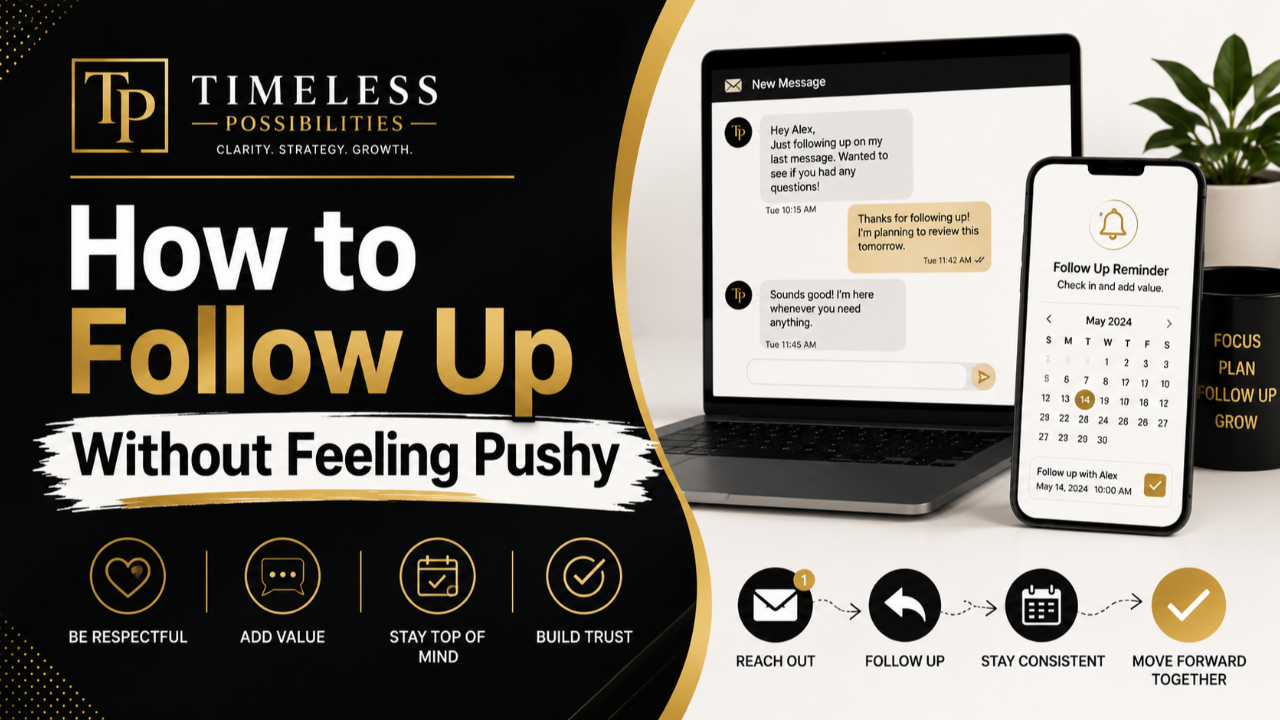
How to Follow Up Without Feeling Pushy
Jul 12, 2026One of the easiest places to lose momentum when building a side income is in the follow-up.
You share your offer with someone. They seem interested. They ask a question, say they will think about it, or tell you to send them more information. You feel encouraged for a moment, but then nothing happens.
A day passes. Then a few more days pass. You wonder whether you should reach out again, but you do not want to seem pushy. So instead of following up, you wait.
And often, the opportunity quietly disappears.
If you want to earn your first $1,000 in extra income, follow-up is not optional. It is part of the process. The key is learning how to follow up in a way that feels respectful, helpful, and natural.
Follow-Up Is Not Pressure
Many people avoid follow-up because they confuse it with pressure. They imagine bothering someone, chasing them, or trying to force a decision. But that is not what good follow-up is.
Good follow-up is simply helpful communication after a conversation has already started. It reminds the person what was discussed, makes the next step clear, and gives them an easy way to respond.
People are busy. They forget. They get distracted. They may be interested and still fail to reply because life gets in the way. A respectful follow-up does not create pressure. It creates clarity.
Silence Does Not Always Mean No
When someone does not respond, it is easy to assume they are not interested. Sometimes that may be true, but silence can mean many things. They may not have seen your message. They may have opened it at a bad time. They may be thinking about it. They may need to talk to someone else before making a decision.
This is why you should not treat silence as rejection too quickly. A simple follow-up gives the person another opportunity to respond without making the conversation uncomfortable.
For example, you might say, “I just wanted to follow up on our conversation from earlier this week. You had mentioned needing help with [problem], and I wanted to see if it would still be useful to talk about a simple next step.”
That kind of message is calm, clear, and respectful.
Make the Next Step Easy
One reason people do not respond is that the next step feels unclear. If they are interested but unsure what to do next, they may put it off. Your follow-up should make the next step simple.
Instead of sending a long message with too many details, offer one clear action. You might ask whether they want to schedule a short call, have you look at the situation, review a simple option, or choose a time to begin.
A good follow-up does not overwhelm people. It reduces the effort required to move forward.
For example, instead of saying, “Let me know what you think,” you could say, “Would it make sense to talk for ten minutes this week so I can understand what you need and suggest a simple next step?”
That gives the person something clear to answer.
Keep the Tone Helpful
The tone of your follow-up matters. You do not want to sound desperate, impatient, or annoyed. You also do not want to apologize for reaching out.
A helpful tone sounds confident and respectful. You are not begging for a response. You are simply continuing a conversation.
You might say, “I wanted to check back in because you mentioned that organizing your records has been stressful. I still think there may be a simple way to help you get that under control.”
That message keeps the focus on the person’s problem and the result they want. It does not make the conversation about your need to make a sale.
Follow Up More Than Once
Many people follow up one time and stop. But one follow-up may not be enough. Again, people are busy. A second respectful follow-up can be appropriate if there was real interest or a previous conversation.
The key is to avoid sounding demanding. Give space between messages and keep your wording simple. A second follow-up might say, “I know things get busy, so I wanted to check once more. If this is still something you want help with, I would be happy to talk through a simple next step. If not, no problem at all.”
That kind of message gives the person permission to respond honestly. It also keeps the relationship respectful.
Know When to Stop
Following up is important, but so is knowing when to move on. If someone does not respond after a couple of respectful follow-ups, do not keep pushing. You can leave the door open without chasing.
A simple final message might say, “I will leave it with you for now. If this becomes something you want help with later, feel free to reach out.”
This keeps the relationship positive and protects your confidence. You are not trying to force someone to act. You are making the opportunity clear and then moving forward.
Remember, your goal is to find the right people at the right time. Not everyone will be ready.
Use Follow-Up to Serve, Not Chase
The best follow-up feels like service. You are reminding someone of a problem they wanted to solve. You are helping them take a simple step if they are ready. You are showing professionalism, consistency, and care.
This mindset changes how follow-up feels. Instead of thinking, “I hope they do not think I am bothering them,” you can think, “I am helping them remember something they said mattered.”
That is a very different energy.
When follow-up is rooted in service, it becomes much easier to do.
Create a Simple Follow-Up Habit
If you are serious about earning your first $1,000, do not rely on memory. Keep a simple list of the people you have contacted, when you reached out, what they said, and when you should follow up.
This does not need to be complicated. A notebook, spreadsheet, or simple note on your phone can work. The important thing is that you track conversations so opportunities do not fall through the cracks.
Many people lose potential customers not because the offer was bad, but because they did not follow up. A simple system can help you stay consistent.
A Simple Challenge for This Week
This week, look back at recent conversations where someone showed interest, asked a question, or said they might know someone who needed help. Choose two or three people and send a respectful follow-up message.
Keep it short. Mention the problem or conversation. Offer one simple next step. Do not pressure them. Do not overexplain. Just reopen the door.
You might write, “I wanted to follow up on our conversation about [problem]. If this is still something you want help with, I would be happy to talk through a simple next step.”
After you send the message, track what happens. Whether they respond or not, you are practicing a skill that is essential for creating income.
Follow-Up Builds Momentum
Your first $1,000 will not usually come from one perfect message. It will come from clear offers, real conversations, respectful follow-up, and consistent action over time.
Following up shows that you are serious. It shows that you are organized. It shows that you care enough to continue the conversation.
You do not need to be pushy. You do not need to chase people. You simply need to communicate clearly, serve honestly, and make the next step easy.
Many opportunities are not lost because people say no.
They are lost because no one follows up.
Download Your Free First $1,000 Side Income Starter Guide
If this article helped you see follow-up in a new way, your next step is to put it into practice with a clear plan. That is why I created The First $1,000 Side Income Starter Guide.
This free guide will help you think through your skills, identify real problems, clarify your offer, and begin taking practical steps toward your first $1,000 in extra income.
You do not need to be pushy to follow up. You need a clear offer, a respectful message, and the willingness to keep the conversation moving.
Download your free First $1,000 Side Income Starter Guide today and start building momentum through simple, consistent action.
And when you are ready for a complete step-by-step process, The First $1,000 Side Income Action Plan will guide you through the full 12-week journey of choosing one opportunity, creating a simple offer, taking consistent action, and earning your first $1,000.
What If You Could Start Creating More Financial Momentum in Just 7 Days?
Reading about financial success can give you ideas. Taking action is what begins to create change.
That's why I created the FREE Money Momentum Starter Guide Workbook—a practical starting point for anyone who wants to make greater financial progress by managing their money more intentionally, exploring opportunities to create additional income, and developing habits that keep them moving forward.
Inside the FREE Starter Guide, you'll discover:
- Where you are financially today and where you'd like to make progress
- Opportunities to take greater control of the money already flowing through your life
- Skills, knowledge, and experience you may be able to turn into additional income
- Practical actions you can begin taking right away
- How to create your own 7-Day Money Momentum Action Plan
You don't need to have everything figured out. You don't need a perfect financial plan or a great business idea. You simply need a starting point and a willingness to take the next step.
Want Some Help Working Through It?
You can complete the Money Momentum Starter Guide entirely on your own for free, or for a one-time $5 upgrade, get 30 days of access to your own Money Momentum AI Assistant to help you work through the workbook.
Your AI Assistant can help you think through questions, explore possibilities when you're unsure what to write, dig deeper into your answers, and turn what you discover into practical next steps and your personalized 7-Day Money Momentum Action Plan.
Start Building Your Money Momentum Today. Download your FREE Money Momentum Starter Guide Workbook and take your first step toward greater financial progress.
